

an electronic storefront. The last two options represent alternative forms of retailing . Today, more than 40,000 businesses have established a home page on the Internet, many of which
serve as electronic storefronts. One can order clothing from Lands' End or lC. Penney, books
from B. Dalton or A.mazon.com, or flowers from Lehrer's Flowers to be sent anywhere in
the world. Essentially, a company can open its own store on the Internet.
Companies and individuals can place ads on commercial online services in three dif-
feren t ways. First, the major commercial online services offer an ad section for listing clas-
sified ads ; the ads are listed according to when they arrived, with the latest ones heading
the list. Second, ads can be placed in certain online newsgroups that are basically set up
for commercial purposes. Finally, ads can also be put on online billboards; they pop
while
su)scribers are using the service, even though they did not request an ad.
Catalog marketing occurs
mail one or more product catalogs to
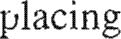
selected addresses that have a high likelihood of placing an order. Catalogs are sent by huge
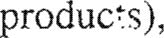
general-merchandise retailers-lC. Penney's, Spiegel- that carry a
of merchan-
dise. Specialty department stores such as Neiman-Marcus and Saks Fifth Avenue send catalogs
to cultivate an upper-middle class market for high-pliced, sometimes
merchandise.
INTEGRATED MARKETING
•
THE DEATH OF RETAILING GREATLY EXAGGERATED
Recently, the MIT economist Lester Thurow suggested that
uct infonnation; 66%
product selection; 70% for
e-commerce could mean the end of 5,000 years of conven-
price, and 74%
ease of use.
tional retailing if online stores can combine price advantages
• Repeat buyers for e-tailers was 21 % compared to 34%
with a pleasant virtual shopping experience. Let's face it: the
for traditional retailers.
growth of malls and megastores have shown that people want
Suggestions to improve the plight of e-tailers include the
selection, con.venience, and low prices, and that's about it.
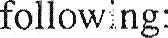
following :
Sure, people say they'd rather shop from the mom-and-pop
• Keep it simple.
on Main Street. ' But if the junk chain store out on the high-
• Think like your customer.
way has those curling irons for a'dollar less, guess where peo-
• Engage in·creative marketing.
ple go?
• Don' t blow everything on advertising.
So a few years into .the e:COlrunerce revolution, here are
• Don't undercut prices.
a few observations and predictions:
While all this advice is good, the recent roller coaster ride of
• Online stores
to become easier to use as well as
high-tech stocks and its disappointing results for e-tailers has
completely trustworthy.
completely changed the future of e-tailing. While e-taiIers
• If people can go online and get exactly what they get
spent about $2 billion industry-wide on advertising campaigns,
from retail stores for less money, that is precisely what
they often devote far less attention and capital to the quality
they will do.
of services their prospective customers receive once they arrive
• Some stores will have a kind of invulnerability to online
on site. E-tailers are learning what brick and mortar retailers
competition; i.e., stores that sell last-minute items or spe-
have known all along, that success is less about building mar-
cialty items that you have to see.
ket share than about satisfying and retaining customers who
• Retail stores may improve their chances by becoming
can generate substantial profits.
more multidimensional; i.e., they have to be fun to visit.
Still, not everything is rosy for e-tailers. Research provides
Sources: Heather Green, "Shake Out
Tailers ," Business Week,
the following insights:
May 15, 2000, pp. 103-106; Ellen Neubome , "It's the Service,
• For net upstarts, the cost per new customer is $82, com-
Business Week, April 3. 2000. p. E8; Chri s Ott; "Will
pared to $3 I for traditional retailers.
Online Shopping Kill Traditional Retail?" The Denver Business
• E-tailers' customer satisfaction levels were: 41 % for cus-
Journal, Oct. 28. 1999, p. 46A; Steve Caulk, "Online Merchants
Need More Effective Web Sites," Rocky
News. Thurs-
tomer service; 51 % for easy returns; 57% for better prod-
day, March 8. 2001 , p. 5B.























CHANNEL INSTITUTIONS: CAPABILITIES AND LI MITATIONS
2 63
Several major corporations have also acquired or developed mail-order divisions via cata-
logs. Using catalogs, Avor; sells women's apparel,
Grace
cheese, and General
Mills sells sport shirts.
Some companies have designed "customer-order
machines," i.e. , kiosks (in
contrast to
machines, which dispense actual
and placed them in stores,
airports, and other locations. For example, the Florsneim Shoe Company includes a machine
in several of its stores in which the customer indicates the type of shoe he wants (e.g., dress, sport), and the color and size. Pictures of Florsheim shoes that meet his criteria appear on
the screen.
Wholesaling
Another important channel member in many dishbution systems is the wholesaler. Whole-
saling includes all activities required to
goods and services to businesses, institu-
tions, or industrial users who are motivated to buy for resale or to produce and market other
products and services.
a
buys a new computer for data processing, a school buys
audio-visual equipment
classroom use, or a dress shop buys dresses for resale, a whole-
sale transaction
taken place.
The vast majority
all goods produced in an advanced
have wholesaling
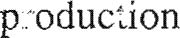
involved in their marketing. This includes manufacturers . who operate sales offices to per-
form wholesale functions, and retailers, who operate warehouses or
engage in
wholesale activities. Even the centrally
economy needs a structure to han-
dle the movement of goods from the point of
to other product activities or to
retailers who distribute to ultimate ccnsumers.
that many
that pelfonn
wholesale functions also engage in manufactwing or retailing.
makes it very difficult
to produce accurate measures of the extent of
activity. For purposes of keeping
statistics, the
of the Census of the United States Department of Commerce defines
wholesaling in terms of
percent of business done by establishments who are primary
wholesalers . It is estimated that only about 60% of all wholesale activity is accounted for
in this way.
Today there are approximately 600,000
establishments in the United States,
compared to just fewer than 3 million retailers. These 600,000 wholesalers generate a total
volume of over 1.3 trillion dollars annually; this is approximately 75% greater than the total
volume of all retailers. Wholesale volume is greater because it includes sales to industrial
users as well as merchandise sold to retailers for resale.
Functions of the Wholesaler
Wholesalers perforrn a number of l.seful functions within the channel of distributions.
may include all or some combination of the
1. Warehousing-the receiving, storage, packaging, and the like necessary to main-
tain a
of goods for the customers they service.
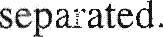
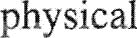
2. Inventory control and order processing-keeping track of the physical
tory, managing its composition and level, and processing transactions to insure
a smooth flow of merchandise from producers to buyers and payment back to
the producers.
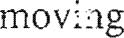
3. Transportation-arranging the physical movement of merchandise.
4. Information-supplying information
to producers and information
about products and suppliers to buyers.
5. Selling-personal contact with buyers to
products and service.




























264
Describe what you're looking for in as much detail as you'd like.
Our AI reads your request and finds the best matching books for you.
Popular searches:
Join 2 million readers and get unlimited free ebooks