

MARKETING CAPSULE
•
1. Developing a pricing strategy
4. Price flexibility allows for different prices charged for dif-
a. Nonprice competition
ferent customers and/or under different situations.
b. Competitive pricing
5. Price bundling groups similar or complementary products
2, New product pricing
and charges a total price that is lower than if they were
a. Penetration
sold separately.
b. Skimming
6. Certain pricing strategies, such as prestige pricing, cus-
tomary pJ1cing, or odd pricing, play on the psychological
Price lining means a number of sequential price points are
perspectives of the consumer.
offered within a product category.
ALTERNATIVE APPROACHES TO DETERMINING PRICE
Price deteonination decisions can be based on a number of factors, including cost, demand,
competition, value, or some combination of factors. However, while many
are
aware that they should consider these factors, pricing remains somewhat of an art. For pur-
poses of discussion, we categorize the alternative approaches to detennining price as follows:
(1) cost-oriented pricing; (2) demand-oriented pricing; and (3) value-based approaches.
Cost-Oriented Pricing: Cost-Plus and Mark-Ups
The cost-plus method, sometimes called gross margin pricing, is perhaps most widely used by marketers to set price. The manager selects as a goal a particular gross margin that will
produce a desirable profit level. Gross margin is the difference between how much the goods
cost and the actual price for which it sells. This gross margin is designated by a percent of
net sales. The percent selected varies among types of merchandise. That means that one
product may have a goal of 48% gross margin while another has a target of
% or 7.% .
A primary reason that the cost-plus method is attractive to marketers is that they do
not have to forecast general business conditions or customer demand. If sales volume pro-
jections are reasonably accurate, profits will be on target. Consumers may also view this
method as fair, since the price they pay is related to the cost of producing the item. Like-
wise, the marketer is sure that costs are covered.
A major disadvantage of cost-plus pricing is its inherent inflexibility. For example,
department stores have often found difficulty in meeting competition from discount stores,
catalog retailers, or furniture warehouses because of their commitment to cost-pius pric-
ing. Another disadvantage is that it does not take into account consumers ' perceptions of a
product's value. Finally, a company 's costs may fluctuate so constant price changing is not
a viable strategy.
When middlemen use the teon mark-Up, they are referring to the difference between
the average cost and price of all merchandise in stock, for a particular department, or for
an individual item. The difference may be expressed in dollars or as a percentage. For exam-
ple, a man's tie costs $4.60 and is sold for $8 . The dollar mark-up is $3.40. The mark-up
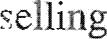
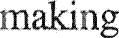
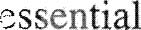
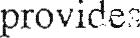
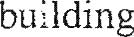
may be designated as a percent of selling price
as a percent of cost of the merchandise.
In this example, the mark-up is 74% of cost ($3.40/$4.60) or 42.5% of the retail price
($3.40/$8).







ALTERNATIVE APPROACHES TO DETERMINING PRICE
243
There are several reasons why expressing mark-up as a percentage of selling price is
preferred to expressing it as a percentage of cost. One is that many other ratios are expressed
as a percentage of sales. For instance, selling expenses are expressed as a percentage of sales.
If
costs are 8%, this means that for each $100,000 in net sales, the cost of selling the
merchandise is $8,000. Advertising expenses, operating expenses, and other types of expenses
are quoted in the same way. Thus, there is a consistency when
comparisons in express-
ing all expenses and costs, including mark-up, as a percentage of sales (selling price) .
Middlemen receive merchandise daily and make sales daily. As new shipments are
received, the goods are marked and put into stock . Cumulative mark-up is the term applied to the difference between total dollar delivered cost of all merchandise and
total dollar
price of the goods put into stock for a specified period of time. The original mark-up at
which individual items are put into stock is referred to as the initial mark-up.
Maintained mark-up is another important concept. The maintained mark-up percentage
is an
fi gure in estimating operating profits. It also provides an indication of effi-
ciency. Maintained mark-up, sometimes called gross cost ofgoods, is the difference
the actual pri ce for which all of the merchandise is sold and the total dollar delivered cost
of the goods exclusive of deductions. The maintained mark-up is typically less than the ini-
tial mark-up due to mark-downs and stock shrinkages from theft, breakage, and the like.
Maintained mark-up is particularly important fo r seasonal merchandise that will likely be
marked-down substantially at the end of the season.
Although this pricing approach may seem overly simplified, it has definite merit. The
problem facing managers of certain types of businesses such as retail food
is that
they must price a very large number of items and change many of those prices frequently.
The standard mark-up usually reflects historically profitable margins and
a good
gui.deline for pricing.
To illustrate this
process of pricing, let's look at the case of Johnnie Walker
Black Label Scotch Whiskey. This product sells fo r about $30 in most liquor stores. How
was this price derived?
$5.00 production, distillation, maturation + $2.50 advertising + $3 .1 1 distribution
+ $4.39 taxes + $7.50 mark-up (retailer) + $7.50 net margin (manufacturer)
Certainly costs are an important component of pricing. No firm can make a profit
until it covers its costs. However, the process of determining costs and then setting a price
based on costs does not take into consideration what the customer is willing to pay at the
marketplace. As a result, many companies that have set out to develop a product have fallen
victim to the desire to continuously add features to the product, thus adding cost. When the
product is finished , these companies add some percentage to the cost and expect customers
to
the resulting price. These companies are often disappointed, as customers are not
willing to pay this cost-based price.
Break-Even Analysis
A somewhat more sophisticated approach to
pricing is the break-even analysis.
The information required for the formula for break-even analysis is available from the account-
ing records in most firms. The break-even price is the price that will produce enough rev-
enue to cover all costs at a given level of production. Total cost can be divided into fixed
and variable (total cost = fixed cost + variable cost). Recall that fixed cost does not change as the level of production goes up or down. The rent paid for
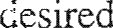
to house the oper-
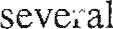
ation might be an example. No cost is fi xed in the long run, but in the short run, many expenses cannot iealistically be changed. Variable cost does change as production is increased or







244
Describe what you're looking for in as much detail as you'd like.
Our AI reads your request and finds the best matching books for you.
Popular searches:
Join 2 million readers and get unlimited free ebooks