

The creation of the single European market in 1992 was expected to change the way
marketing is done worldwide. It meant the birth of a market that was larger than the U nited
States, and the introduction of European Currency Units (Euros) in place of the individual
currencies of member nations. Experience in multilingual marketing would help non-Euro-
pean companies succeed in this gigantic market. With new technologies such as multilin-
gual processing programs, it would be possible to target potential customers anywhere in
Europe, in any language, and in the same marketing campaign.
Progress toward European unification has been slow-many doubt that complete uni-
fication will ever be achieved. However, on January 1, 1999, 11 of the 15 member nations
took a significant step toward unification by adopting the Euro as the common currency.
These 11 nations represent 290 million people and a $6.5 trillion market. Still, with 14 dif-
ferent languages and distinctive national customs, it is unlikely that the EU will ever become
the "United States of Europe."
Tariffs
Most nations encourage free trade by inviting firms to invest and to conduct business there,
while encouraging domestic firms to engage in overseas business. These nations do not usu-
ally try to strictly regulate imports or discriminate against foreig n-based firms. There are,
however, some governments that openly oppose free trade. For example, many Commu-
nis Lnations desire self-sufficiency. Therefore, they restrict trade with non-Communist nations.
these restrictions vary with East-West relations.
The most common form of restriction of trade is the tariff, a tax placed on imported
goods. Protective tariffs are established in order to protect domestic manufacturers against
competitors by raising the prices of imported goods. Not surprisingly, U.S. companies with
a strong business tradition in a foreign country may support tariffs to discourage entry by
other U.S.
Expropriation
All multinational fi rms face the risk of expropriation. That is, the foreign government takes ownership of plants, sometimes without compensating the owners. However, in many expropriations there has been payment, and it is often equitable . Many of these fac ilities end up
as private rather than
organizations. Because of the risk of expropriation, multi-
national firms are at the
of fo reign governments, which are sometimes uns table, and
can change the laws they enforce at any point in time to meet their needs.
The Technological Environment
level of technological development of a nation affects the attractiveness of doing busi-
ness there, as well as the type of operations that are possible. Marketers in developed nations
cannot take many technological advances for granted. They may not be availab le in lesser-
developed nations. Consider some of the following technologically related problems that
firms may encounter in doing business overseas:
• Foreign workers must be trained to operate unfamiliar equipment.
• Poor transportation
;ncrease production and physical distribution costs .
• Maintenance standards vary from one nation to the next.
• Poor communication
hinder advertising through the mass media.
• Lack of data
facilities makes the tasks of planning, implementing, and
controlling
strategy more difficult.






























THE INTER NATIONAL
ENVIRONMENT
The Economic Environment
A nation's economic situation represents its current and potential
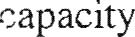
to produce goods
and services. The
to understanding market opportunities lies in the evaluation of the
stage of a nation's economic growth.
A way of classifying the economic growth of countries is to divide them into three
groups: (1)
(2) developing, and
less-developed nations. The industrial-
ized nations are generally considered to be the United States, Japan, Canada, Russia, Australia and most of Western Europe
of these nations are characterized by
private enterprise and a
orienta
They have high literacy, modem technology,
and higher per
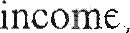
i;1comes,
Developing nations are
that are making the transitIOn from economies based
on agricultural and raw materials production to industrial economies, Many Latin Ameri-
can nations fit into this category, and they exhibit rising levels of education, technology,
and per capita incomes,
Finally, there are many less developed
in today's
These nations have
low standards of living, literacy rates are low, and technology is very limited .
Usually, the most significant marketing opportunities exist among the industrialized
nations, as they have high levels of
one
the
ingredients for the for-
mation of markets. However, most industrialized nations also have stable population bases,
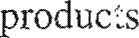
market saturation for many
already exists.
developing nations, on the other
hand, have growi ng population bases, and although they currently import limited goods and
services, the long-run potential for growth in these nations exists. Dependent societies seek
products that satisfy basic needs-food, clothing, housing, medical care, and education. Mar-
keters in such
must be
information in their market programs,
As the degree of economic development increases, so does the sophistication
the mar-
keting effort focused on the countries,
Th e Competitive Environment
Entering an international market is similar to doing so in a domestic market, in that a firm
seeks to gain a clifferential advantage by investing resources in that market. Often local firms will
imitation strategies,
successfully. When they are successful, their own
nation's
receives a good boost.
they are not successful, the multinational
firm often buys them out.
Japanese marketers have developed an approach to managing product costs that has
given them a competitive advantage over U.S. competitors. A typical American company
will design a new product, then calculate the cost. If the estimated cost is too high, the prod-
uct will be taken back to the drawing board. In Japan, a company typically starts with a
target cost based on the price that it estimates the market is most willing to accept. Prod-
uct
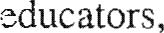
and engineers are then directed
meet the cost target.
approach also
managers to worry less about
costs and more about the role it should
play in gaining market share, Briefly, at Japanese companies like NEC, Nissan, Sharp, and
Toyota, a team charged with bringing a product idea to market estimates the price at which
the product is most likely to appeal to the market. From this first impOltant judgement, all
else follows. After deducting the required profit margin from the selJing price, planners
develop estimates of each element that make up the product's cost: engineering, manufac-
sales, and marketing. U.S. firms tend to bui ld products, figure how much it costs to
build
product, and then ask whether the product can be sold at a profitable price. U.S.
companies tend not to assess what the
will be willing to pay.


1 46
Describe what you're looking for in as much detail as you'd like.
Our AI reads your request and finds the best matching books for you.
Popular searches:
Join 2 million readers and get unlimited free ebooks