

units at prices from $1 ,500 to $2,500, Cowing was adamant that none of these systems gave as bright a picture as UT's, He estimated that about 10,000 large screen systems were sold in 1996.
Cowing expected about 50% of the suggested retail-selling price to go for wholesaler and retailer margins. He expected that UT's direct manufacturing costs would vary depending on the volume produced. He expected direct labor costs to fall at higher production volumes due to the increased automation of the process and improved worker skilJs.
Material costs were expected to fall due to less waste due to automation. The equipment costs
necessary to automate the product process were $70,000 to produce in the 0-5,000 unit range; an
additional $50,000 to produce in the 5,001-10,000 unit range; and an additional $40,000 to produce in the 10,001 -20,000 unit range. The useful life of thi s equipment was put at five years. Cowing was sure that production costs were substantially below those of
competitors including Sony. Such
was the magnitude of UT 's technological breakthrough. Cowing was unwilling to produce over 20,000
units a year in the first few years due to the limited cash resources of the company to support inventories and so on.
Cowing wanted to establish a position in the consumer market for hi s product. He felt that the
long-run potential was greater there
in the commercial market. With this end in mind, he hired
a small economic research-consulting
to undertake a consumer study to determine the likely reac-
tion to alternative retail prices for the system. These conSUltants took extensive pricing histories competitive products. They concluded that, "UT's video screen system would be highly price-elastic across a range of prices from $500
bOlh
a primary and secondary demand sense."
They went on to estimate the price elasticity of demand in
range to be between 4.0 and 6.5.
Mr. Cowing was considering a number
alternative suggested retail prices.
can see argu-
ments for pricing anywhere fro m above
to substantially below
lowest price, ' he
said. A decisi on on pricing was needed soon.
Questions:
1. Should penetration pricing be used or would skimming be better?
2. What should be the base price for the new product?
REFERENCES
1. T homas Nagle, "Pricing as
Business Horizons,
3. Bernard F. Whalen, "Strategic Mix of Odd, Even Plices Can
to
July-August
pp.14-19.
Re tai l Profits," Marketing
March 1976, p. 24.
2. Robel1 A. Robicheau x,
Important is Pricing in Competitive
4. Peter Coy, ''The Power of Smart Marketing," Business Week, April
Strategy?" Pro ceedings of the Sou the rn l:1arketing Association
10,2000, pp. 160-162.
1975, pp. 55-5 7















REFERENCES
251
LOWEST PRICES
E. S. Robbins
-
Aurora
520 South Chambers Road
Sou rce for
www.aaronofficefurniture.com
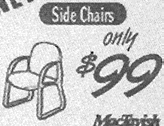
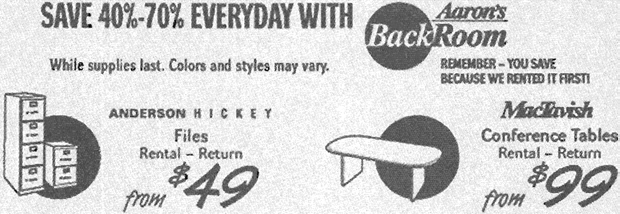
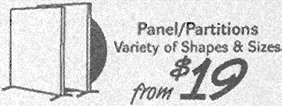
AD 9 .4 A traditional retail ad.
















10
Describe what you're looking for in as much detail as you'd like.
Our AI reads your request and finds the best matching books for you.
Popular searches:
Join 2 million readers and get unlimited free ebooks