

They thoroughly fIlled a sensory space in terms of texture, flavor,
and appearance with 25-20 products.
A questionraire was developed that required quantitat ive ratings
(such as 100% scale
of product attributes that were unique
to some products. There were questions abou t hardness, chewiness,
crispness, flavor intensity, degree of fruit flavor, sweetness, tartness,
color, and many more . Overall liking for each product was also
measured.
How well each product and brand performed-the overall liking
score for each product-was not an objective of the study. The point
was to discover the most generalized drivers of consumer acceptability
in the confectionary ca tegory. Products were ranked by their per form -
ance and key
properties. Close s t udy of the data revealed
that these consumers were: not the least bit influenced by brand .
Overal l taste was the dominant factor. Second , a new chocolate prod-
uct held the most promise . Of all flavors explored, chocolate capti-
vated consume rs most. In fact, the ideal product is chocolate-filled
chocolates
chocolate dipping sauce.
Sources: Jeff Braun , "Overcoming the Odd s. " Marketing News, March 29,
1999. pp . 15-16: David Fishben, "Sweet Success: Category Appraisal is
Proven Source of New Ideas," Marketing News . March 29, 1999, pp. 15-16;
"On Your Mark ," Entrepreneur, April 1999, pp. 161-162; Lau-
rie Freeman, "Brach's Fruit Snacks Shapes," Advertising Age. June 28 , 1999,
pp. 5-7.
There are two common techniques for screening new product ideas; both involve the
comparison of a potential product idea against
of acceptable new products. The fi rst
technique is a si.nple checklist. For example, new product ideas can be rated on a scale rang-
ing from very good
poor, in respect to
such as: value added, sales volume, patent
protection,
on present products, and so forth. Unfortunately, it is quite difficult for raters
to define what is fair or poor. Also, it does not address the issue of the time and e;;pense
associated with each idea, nor does it instruct with regard to the scores. A second technique
goes beyond the firs t: the criteria are assigned importance weights and then the products are
rated on a point scale measuring product compatibility. These scores are then multiplied by
their respective weights and added to yield a total score for the new product idea. Table 7.1
provides an example of both these techniques for screening new product ideas.
Step 3: Business Analysis
After the
product ideas survive their initial screen, very few viable proposals will
remain. Before the development of prototypes can be decided upon, however, a further eval-
uation will be conducted to gather additional information on these remaining ideas in order
to justify the
costs required. The focus of the business analysis is primarily on
profits, but other considerations such as social responsibilities may also be involved.
The first step in the business analysis is to examine the projected demand. This would
include two major
of revenue: the sales of the product and the sales or license of
the technology developed for or generated as a by-product of the
product.















PRODUCT PLANNING AND STRATEGY FORMULATION
177
TABLE 7. 1
Sc reening Product Ideas
Rating
Very Good
Fair
Poor
Unweighted
Weighted
Weight
(5 )
(4)
(3)
(2 )
(1)
Value
Value
Customer utilities
- amusement
.'1
X
5
.5
- comfort
.'1
X
3
.3
- convenience
:<
4
.8
- satisfaction
.3
X
4
1.2
- easy to use
.1
X
3
.3
Ability to create
effective sales
appeals
.3
X
4
1.2
Price
1
X
2
2
Product quality
.2
X
3
.6
Product profitability
.2
X
3
.6
Attractiveness of
product to customers
.1
4
.4
Ability to produce
in
large volumes
.3
X
5
1.5
Ability of new product
in helping sale of
other products
.1
X
.1
Requires low
capital investment
.3
:.(
4
1.2
Product can be
promoted
existing advertising
.2
X
3
.6
Product can be
produced in
existing facilities
.3
X
4
1.2
Product can be
distributed through
existing channels
.3
X
3
.9
Strength of
.2
X
3
.6
Patent situation
.1
X
Total Score
60
12.4
A complete cost
is also necessary as part of the business analysis.
is
ficult to anticipate all the costs that will be involved in product development, but the fo l-
lowing cost items are typical:
• Expected
including both technical and marketing
• Expected set-up costs (production, equipment, dislribution)
• Operating costs that account for possible economies of scale and learning curves
• Marketing costs,
and
• Management














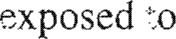

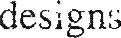




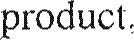


17 8
Describe what you're looking for in as much detail as you'd like.
Our AI reads your request and finds the best matching books for you.
Popular searches:
Join 2 million readers and get unlimited free ebooks