

Simultaneous Production and Consumption
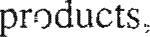
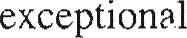
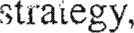
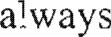
Service products are characterized as
those that are being consumed at the same time they are being produced. The tourist attrac-
tion is producing entertainment or pleasure at the same time it is being consumed. In con-
trast, goods products are produced, stored, and then consumed. A result of this characteristic
is that the provider of the service is often present when consumption takes place. Dentists,
doctors, hair stylists, and ballet dancers are all present when the product is used.
Little Standardization
Because service products are so closely related to the peo-
ple providing the service, ensuring the same level of satisfaction from time to time is quite
difficult. Dentists have their bad days, not every baseball game is exciting, and the second
vacation to Disney World may nol be as wonderful as the first.
High Buyer Involvement
With many service products, the purchaser may provide
a great deal of inout into the final form of the product. For example, if you wanted to take
a Caribbean cruise., a good travel agent would give you a large selection of brochures and
pamphlets describing
various cruise locations, options provided in terms of cabin loca-
size, islands visited, food, entertainment, prices, and whether they are set up for
children. Although the task may be quite arduous, an individual can literally design every
moment of the vacation.
should be noted
these four characteristics associated with service products vary
in intensity from product to product. In fact, service products are
viewed as being on
a continuum in respect to these four characteristics. (See Figure 7.2.)
The point of this disclaimer is to suggest: (1) that service products on the right side
of the continuum--e.g., high intangibility-are different from good products on the left side
of the continuum, (2) that most marketing has traditionally taken place on the left side, and
(3) service products tend to require certain adjustments in their marketing strategy because
of these differences.
CHARACTERISTICS THAT DISTINGUISH GOODS FROM SERVICES
Goods
Services
!---II--+----+-----------t------I
Salt
VCR
Auto
Fast Food Customer
Airlines
Teaching
Investment
Restaurant
Clothes
Advice
Tangible
Intangible
Low Customer
High Customer
Involvement
Involvement
Low Quality
High Quality
Control Problems
Control Problems
Easy to Evaluate
Hard to Evaluate
Inventories
No Inventories
No Time Criteria
Strict Time Criteria
Low Importance of
High Importance of
Contact Points
Contact Points
FIGURE 7.2
Characteristics that distinguish goods from services












PRODUCT PLANNING AND STRATEGY FORM ULATION
159
While this discussion implies that service products are marketed differently than goods
products, it is important to remember that all
whether they are goods, services,
blankets, diapers, or plate glass, possess peculiarities that require
in the mar-
keting effort. However, "pure" goods products and "pure" service products (i .e., those on the extreme ends of the continuum) tend to reflect characteristics and responses from customers that suggcSt opposite marketing strategies. Admittedly, offering an
prod-
uct at the right price, through the most accessible channels, promoted extensively and
accurately,
work for any type of product. The goods/services classification provides
the same useful insights provided by the consumer/industrial classification discussed earlier.
PRODUCT PLANNING A ND ST RATEGY FORMULATION
The
purpose of this chapter is to introduce the idea that products
planned, and
that a whole series of decisions go into this planning process-from
moment the prod-
uct idea is first conceptualized to the day it is finally deleted. The particular label placed
on the company's
for marketing its product is the product strategy. It is part of the
marketing strategy and should harmonize with it. Like the marketing
it contains
three important elements. (1) the determination of product objectives, (2) the development
of product plans that will help reach product objectives, and (3) the development of strate-
gies appropriate for the introduction and management of products .
The Determination of Product Objectives
There are a great many objectives that relate to the product management effort. Rather
attempting to provide a complete list, a discussion of the most common product objectives
will provide an adequate illustration.4
It is safe to conclude that a universal objective is growth in sales as a result of the introduction of a new product or the improvement of an existing product. Certainly, there
is little need to engage in either product activity unless this objective is present.
An objective related to growth in sales is finding new uses for established products .
Since this process is generally easier than developing new products, the search for new uses
of older products goes on endlessly. For example, Texas Instruments has found numerous
uses for their basic product, the semiconductor.
Using excess capacity is another commonly stated product objective. This objective
is prompted by the rapid turnover
products and the resulting changes in market share.
Of course, such utilization is
a short-run consideration. In the long
only those
products that
generate a continuing
of profitability should be retained, regardless
of the problem of excess capacity.
Maintaining or improving market share may also be an objective
by many com-
panies. In such cases, the emphasis of the firm is on their competitive position rather
attaining a target level of profits. Creating product differentiation is often the primary strategy employed to reach this objective.
Developing a full line ofproducts is another typical objective. A company with a par-
tial product line may well consider the objective of rounding out its product offerings . Often, the sales force provides the impetus for this objective in that they may need a more complete product line to offer their
or the resellers themselves may request a greater
assortment.
Expanding a product's appeal to new market segments is a common objective. John
Deere is attempting to increase its small share of the consumer power products market by


160
Describe what you're looking for in as much detail as you'd like.
Our AI reads your request and finds the best matching books for you.
Popular searches:
Join 2 million readers and get unlimited free ebooks